
Ask anyone who’s looked into anal play and they’ll tell you the same thing: use plenty of lube. What almost nobody explains is why that’s non-negotiable, which of the four types to reach for, or how much “plenty” means in practice. So beginners end up guessing between a water bottle, a silicone tube and something oil-based, hoping for the best.
The reason behind the rule is anatomical, and it’s worth understanding rather than memorising. Unlike the vagina, the anus and rectum produce essentially no lubrication of their own, and the tissue lining them is thinner and far easier to tear. That one fact drives every other decision here: the type you choose, how much you use, and when you reapply. If you’re brand new to the topic, our beginner’s guide to anal play and prostate wellness covers preparation and technique; this article is specifically about the lubricant. The standards below come from the World Health Organization and peer-reviewed safety literature.
Key Takeaways
- The anus doesn’t self-lubricate. The vagina does, via mucosal glands; the anal canal and rectum don’t, and the rectal lining is a thin single layer of cells that tears easily. External lube replaces a lubrication system the body doesn’t have there.
- Water-based is the safe default. It’s compatible with every condom and every toy material. Silicone lasts longer but degrades silicone toys; oil destroys latex condoms.
- Most store-bought lubes are harsher than your tissue. The WHO recommends lubricants stay near your cells’ own balance (ideally under 380 mOsm/kg), yet common products have tested at 3,631 to 6,113 mOsm/kg, which can damage the lining you’re trying to protect.
- Skip numbing creams. Masking pain switches off the warning signal that tells you a tear is starting, which is exactly when injuries happen.
- There is no “too much.” Coat both the toy and yourself, and reapply the moment glide turns to drag.
Why doesn’t the anus lubricate itself?
The short answer is that it was never built to. The vagina is lined with mucous membranes that secrete their own lubrication in response to arousal. The anal canal and lower rectum aren’t. They’re designed for the opposite job: absorbing water, not releasing it. So when you introduce friction to a passage that produces no moisture, everything has to come from a bottle.
There’s a second, less obvious difference, and it’s about the tissue itself. The vaginal wall is a thick, multi-layered lining built to stretch. The rectal lining is a single, delicate layer of column-shaped cells, which is part of why it absorbs so efficiently and also why it tears so easily under friction. Tiny micro-tears from a dry or under-lubricated encounter are sore, and they’re open doors for infection.
Receptive anal intercourse carries the highest per-act risk of HIV transmission of any sexual route, estimated at about 138 per 10,000 exposures, compared with roughly 8 per 10,000 for receptive vaginal sex (CDC / Patel et al., AIDS). The reason for that gap is the tissue itself: an unlubricated, easily-torn lining is more vulnerable. Generous lubrication is the single most direct way to reduce the friction that causes those tears.
The anus and rectum produce essentially no natural lubrication, and the rectal lining is a thin single layer of cells that tears far more easily than the multi-layered vaginal wall. That combination is why receptive anal sex carries the highest per-act HIV transmission risk of any sexual route, and why generous external lubricant is the single biggest factor in comfortable, injury-free anal play.
What are the main types of anal lube?
Lubricants come in four families, and the right choice is a trade-off between how long the glide lasts and what it’s safe to use with. Water-based is the universal default, silicone-based is the marathon runner, oil-based is slick but breaks condoms, and hybrid blends try to split the difference. None of the four is best in every situation; each one fits a particular setup.
Here’s the honest breakdown:
- Water-based. Safe with every condom and every toy material, rinses off with plain water, and won’t stain. The trade-off is longevity: it absorbs into skin and evaporates, so you reapply more often. For anal play this is where almost everyone should start.
- Silicone-based. A few drops last a long time, it doesn’t absorb, and it’s waterproof, so it suits long sessions and shower play. The catch: it can degrade silicone toys and needs soap to wash off.
- Oil-based. Very long-lasting and cheap (coconut oil is the usual example), but it breaks down latex condoms and can be hard to clean. Avoid it with condoms entirely.
- Hybrid (water + silicone). Longer-lasting than pure water-based, easier to clean than pure silicone. It may still affect some silicone toys, so check before pairing.
The condom question is where people most often get this wrong, and it’s not a small risk. In one clinical study, oil-based lubricant significantly increased condom slippage, to 8.5% of uses versus 3.8% without it, and 76% of the couples surveyed didn’t know which lubricants were condom-safe (Steiner et al., Contraception). The table below maps the whole decision in one place.
| Water-based | Silicone-based | Oil-based | Hybrid | |
|---|---|---|---|---|
| Latex-condom safe | Yes | Yes | No | Yes |
| Silicone-toy safe | Yes | No | Yes | Check first |
| Longevity | Shorter (reapply) | Very long | Very long | Medium |
| Cleanup | Rinses with water | Needs soap | Hardest | Moderate |
| Best for | Default, toys, condoms | Long sessions, water play | Condom-free only | A middle ground |
Lubricants fall into four families. Water-based is the safe default because it works with every condom and toy material and rinses clean. Silicone-based lasts longest and is waterproof but degrades silicone toys. Oil-based is slick and cheap but breaks down latex condoms, and in clinical testing raised condom slippage to 8.5% from 3.8%. Hybrids split the difference. Match the type to your condom and toy before you buy.
Water-based vs. silicone: which is actually best for anal?
For most people and most toys, water-based is the right default, and it isn’t close. It’s the only family that’s simultaneously safe with latex condoms, safe with silicone toys, and easy to rinse off. Silicone-based earns its place in specific situations, but it comes with one hard rule that catches a lot of buyers out.
The difference that matters most is reapplication. Water-based lube works by leaving a water film, and water absorbs into skin and evaporates, so on a long session you’ll top it up a few times. That’s a feature as much as a flaw: it means cleanup is just water, and it never leaves a residue on your toy. Silicone-based doesn’t absorb at all, so a small amount keeps gliding for far longer and won’t wash away in the shower. If you’re planning extended play or water play, that matters.
The hard rule is about toys. Silicone lubricant can damage silicone toys, because chemically “like dissolves like”: the silicone fluid is absorbed into the silicone toy as a plasticiser, and the surface swells, turns tacky and becomes porous. In hands-on material testing the change showed up within about 48 hours and was permanent (BedBible lab test). There’s no peer-reviewed study on this yet, so treat it as well-established industry testing rather than academic consensus, but the practical guidance is unambiguous: if your toy is silicone, use water-based lube. If you’re not sure what your toy is made of, water-based is always the safe answer.
Water-based lubricant is the right default for anal play because it’s the only family safe with latex condoms, silicone toys, and easy to rinse off, at the cost of needing reapplication on long sessions. Silicone-based lasts far longer and is waterproof, but it can permanently degrade silicone toys, so never pair the two. When in doubt about a toy’s material, water-based is always safe.
Is numbing or “desensitising” anal lube safe?
No, and the reason is more specific than the one-line warning most guides give. Numbing lubricants use local anaesthetics such as benzocaine or lidocaine to dull sensation. The selling point is comfort, but here pain is useful information: it’s your body’s alarm that tissue is stretching too far or starting to tear. Switch that alarm off and you can injure yourself without feeling it happen, only discovering the damage once the numbness wears off.
That’s the problem with the whole category. Anal play done well shouldn’t hurt in the first place: discomfort is feedback telling you to slow down, add more ordinary lube, or stop. A numbing cream doesn’t fix the cause of discomfort; it just stops you from hearing the message. The safer route to comfort is the unglamorous one: more time, more relaxation, and more regular lubricant.
There’s also a separate chemical risk that has nothing to do with masking pain. Benzocaine in particular is responsible for more than half of reported local-anaesthetic cases of methemoglobinemia, a rare but serious blood condition that reduces the blood’s ability to carry oxygen (National Capital Poison Center). A numbing agent also transfers to a partner and dulls their sensation. Our advice is simple: skip desensitising products entirely.
Numbing or desensitising anal lubes are best avoided. They use anaesthetics like benzocaine or lidocaine to dull sensation, but pain is the body’s warning that tissue is starting to tear, so masking it removes the signal that tells you to slow down or stop. Benzocaine also carries a rare risk of methemoglobinemia, a blood condition. The safe path to comfort is more time, more relaxation, and more ordinary lubricant, not anaesthesia.
Are all lubes equally gentle? Osmolality, pH and ingredients
No. Two lubricants can feel identical in your hand yet behave very differently against rectal tissue, and the difference comes down to chemistry: how concentrated the lube is (its osmolality) and how acidic or alkaline it is (its pH). Getting this right matters more for anal use than for almost anything else, because the rectal lining is so thin.
Osmolality sounds technical but the idea is simple. It’s a measure of how concentrated a solution is compared with your own cells. A lubricant that matches your body (iso-osmolar) sits in balance with your tissue. A lubricant that’s far more concentrated (hyper-osmolar) pulls water out of your cells by osmosis, which stresses and can damage the delicate lining. The World Health Organization recommends that lubricants ideally stay at or below 380 mOsm/kg, matching the body’s own fluids, and sets an outer procurement limit of 1,200 mOsm/kg, with a pH around 5.5 to 7 for anal use (WHO/UNFPA/FHI 360 advisory note, 2012).
Most commercial lubricants blow past that limit. In laboratory testing, K-Y Jelly measured about 3,631 mOsm/kg, nearly ten times the ideal (Cunha et al., International Journal of Gynaecology and Obstetrics, 2014), and a separate study measured Astroglide at 6,113 mOsm/kg (Dezzutti et al., PLoS ONE, 2012). This isn’t an abstract concern: in a small human study, a highly-concentrated lubricant caused measurably greater sloughing of rectal epithelial cells than a balanced one (Fuchs et al., Journal of Infectious Diseases, 2007). In plain terms, a harsh lube can damage the tissue it’s supposed to protect.
You won’t find osmolality printed on most labels, but you can stack the odds in your favour. Choose a body-safe water-based formula, and scan the ingredient list for a few known irritants: high glycerin content (a common culprit behind very high osmolality), parabens, the spermicide nonoxynol-9, and polyquaternium-15, all of which the WHO flags for irritation or tissue effects. A short, simple ingredient list on a water-based lube is usually a good sign.
Lubricants differ in how gentle they are on tissue, and the deciding factor is chemistry, not feel. Osmolality measures how concentrated a lube is compared with your cells; hyper-osmolar lubes pull water out of rectal tissue and can damage it. The WHO recommends staying at or below 380 mOsm/kg, yet common products like K-Y Jelly (3,631) and Astroglide (6,113) test far higher. Choose a body-safe water-based lube and avoid high glycerin, parabens, nonoxynol-9 and polyquaternium-15.
How much lube should you use, and when do you reapply?
More than your instinct tells you, and then some. There is no “too much” when it comes to anal lubricant. A good starting point is a generous coat on both the toy or body part and on yourself, because a single dab on one surface gets wiped away on entry. Think of it as creating a lasting film, not a spot treatment.
The reapplication rule is just as important, and it’s sensory rather than a fixed timer: the moment glide turns to drag, add more. You’ll feel the difference immediately. This matters most with water-based lube, which absorbs and evaporates as you go. Rather than stopping to check a clock, keep the bottle within arm’s reach and top up the instant friction increases. If you’re switching toys or changing position mid-session, add a fresh coat to the new surface before continuing rather than relying on residue.
If all of this sounds excessive, it helps to know how common lubricant use is. In a nationally representative US survey, 65.5% of women had used a commercial lubricant at some point, and 20% in the past month alone (Herbenick et al., Journal of Sexual Medicine, 2014); men’s figures were similar. Reaching for lube, and reaching for it often, isn’t a sign something’s wrong. It’s what experienced people do.
Use a generous amount of lubricant, coating both the toy and yourself, and reapply the moment glide turns to drag rather than on a fixed schedule. There is no “too much” for anal play. Water-based lube absorbs as you go, so keep the bottle within reach and top up whenever friction increases. Lubricant use is mainstream: about two-thirds of adults have used it.
How do you choose and buy anal lube discreetly in the UAE?
Pulling this together into a buying decision is simpler than the chemistry makes it sound. For anal play you want a body-safe, water-based lubricant with a short ingredient list and no numbing agents. That single description covers every rule in this guide: condom-safe, toy-safe, gentle on tissue, and easy to clean. It’s the one bottle that works in essentially every situation.
For readers in the UAE, the other half of the question is privacy, and it’s a fair concern. Ordering from a local specialist is discreet by default: every parcel goes out in plain, unmarked packaging, cash on delivery means nothing ever appears on a card statement, and fast local delivery means the package isn’t sitting in a sorting facility. That combination is what most of our customers care about. If you want the full detail, we’ve documented how discreet delivery works in the UAE and the honest answer to whether sex toys are legal in the UAE.
If you’d like a place to start, our smooth water-based lubricant is body-safe, condom- and toy-friendly, and made for exactly this kind of use. You can also browse the full lubricant range to compare.
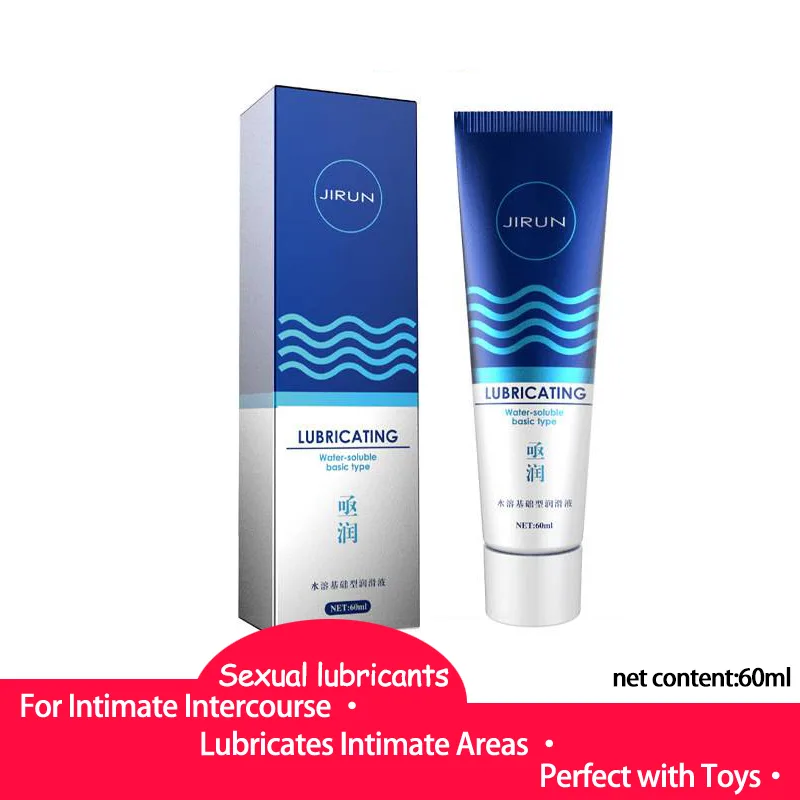
For anal play in the UAE, choose a body-safe water-based lubricant with a short ingredient list and no numbing agents, since that one choice covers condom-safety, toy-safety and tissue-safety at once. Buy from a local specialist for discretion: plain unmarked packaging, cash on delivery so nothing shows on a card statement, and fast local delivery.
Frequently asked questions
Can you do anal without lube?
We’d advise against it. The anus doesn’t self-lubricate, so going without lube means direct friction on a thin, easily-torn lining, which raises the risk of pain and micro-tears. There is no scenario where skipping lube improves anal play. Use plenty, every time.
Is Vaseline or coconut oil okay for anal?
They’re slick and long-lasting, but they’re oil-based, which makes them a poor default. Oil breaks down latex condoms: in one laboratory test, as little as 60 seconds of contact with mineral oil destroyed about 90% of a latex condom’s strength (Voeller et al., Contraception). Oil is also hard to wash off. If you’re using condoms or toys, water-based is the safer choice.
Can you use silicone lube with a silicone anal toy?
No. Silicone lubricant can degrade silicone toys: the fluid is absorbed into the toy’s surface, making it swell, turn tacky and become porous. The damage is permanent. Use water-based lubricant with any silicone toy, and reserve silicone lube for non-silicone toys or skin-on-skin play.
How do you clean up afterwards?
Water-based lube rinses off skin with plain warm water. Wash toys with mild soap or a dedicated toy cleaner, rinse thoroughly, and let them air-dry completely before storing, since trapped moisture is what causes odour and mould. Silicone and oil-based lubes need soap to remove fully.
Does a more expensive lube actually matter?
Price matters less than the formula. What counts is that it’s body-safe, water-based for versatility, free of numbing agents, and light on irritants like high glycerin and parabens. A well-formulated mid-priced water-based lube will serve you better than a costly one loaded with irritants.
The bottom line
Anal play needs special lubrication for one underlying reason: the body doesn’t provide any there, and the tissue involved is thin and easily hurt. Everything else here follows from that. Reach for a body-safe water-based lube as your default, keep silicone for non-silicone toys and oil away from condoms, refuse numbing creams, favour a gentle formula over a harsh one, and use far more than you think you need.
- Water-based is the default: safe with every condom and toy, easy to clean.
- Match lube to material: silicone lube degrades silicone toys; oil breaks latex condoms.
- Choose gentle chemistry: aim for a formula near your body’s own balance and short on irritants.
- Comfort without numbness: go slow and add more lube instead of masking pain.
- Reapply freely: the moment glide turns to drag, top up.
When you’re ready, our water-based lubricant and the wider lubricant range are a body-safe place to start, and every order ships in plain packaging, cash on delivery, with nothing on your card statement. If you’re still getting oriented, our beginner’s guide to anal play and prostate wellness covers preparation and technique, and our guide to choosing anal toys helps you pick the right first toy to use it with.
This guide is for general educational purposes and isn’t a substitute for personal medical advice. If you have a health condition, experience persistent pain or bleeding, or have any concern about anal play, talk to a qualified healthcare provider.