
Two worries stop most people before they start: will it hurt, and is it safe. Both are fair questions, and both have honest answers that most guides either skip or bury under euphemism.
Here’s the short version. Anal play is safe for most healthy adults, and it should not hurt. When it does hurt, something specific is wrong. Usually it’s too little lubricant, too much speed, or the wrong toy, and every one of those causes is fixable. The anxiety is normal. The pain doesn’t have to be.
This guide walks through the whole thing the way a careful clinician would: the anatomy that explains the rules, the hygiene that matters, the lubricant you need and why, what prostate massage really is, and how to choose a first toy that won’t put you off. We’ve grounded it in urology literature rather than guesswork, and we’ve written it for readers in the UAE, where privacy isn’t a nice-to-have.
Key Takeaways
- Anal play is safe for most healthy adults when you go slowly, use plenty of water-based lubricant, and choose a body-safe toy with a flared base. Pain is a stop signal, not something to push through.
- The anus doesn’t self-lubricate, and the rectum curves. Those two facts explain nearly every beginner rule in this guide.
- Prostate massage can be intensely pleasurable. Its medical benefits are real but limited and mixed: a 2025 American Urological Association update does not recommend it as a primary treatment for the most common prostate pain condition.
- In one study of an at-home prostate device, only 0.87% of users reported any rectal bleeding, and no serious adverse events were recorded across more than 250,000 devices in use (Open Urology & Nephrology Journal).
- Buying in the UAE is discreet by default with a local specialist: plain packaging, cash on delivery, and nothing on a card statement.
If you’re mainly wondering about the legal and privacy side of buying in the Emirates, that’s a separate subject and we’ve covered it properly in our guide to buying sex toys privately in Dubai and the UAE. This page is about the practice itself.
Table of contents
- Is anal play safe?
- The anatomy that makes anal play work
- How do you prepare for anal play?
- Why does anal play need special lubrication?
- What is prostate massage, and is it good for you?
- How do you use anal toys safely the first time?
- How do you choose a first anal toy?
- Privacy, discretion, and buying in the UAE
- Frequently asked questions
Is anal play safe?
Yes, for most healthy adults, provided you go slowly, use lubricant, and use toys designed for the job. The activity carries a short list of real risks, and every one of them is preventable with basic technique. That framing matters, because the fear is usually vaguer than the actual danger.
There are three risks worth knowing by name.
Tearing and soreness. The tissue involved is delicate and doesn’t stretch the way other tissue does. Force and speed cause small tears; patience and lubricant prevent them. Soreness afterward is common on a first attempt and usually fades within a day. Sharp or lasting pain is not normal and means stop.
Infection. The rectum contains bacteria that don’t belong elsewhere. This is why anything that goes in must be clean, why you never move a toy from anal to vaginal use without washing it, and why condoms over toys are a sensible option.
A lost object. The one risk that’s unique to this kind of play, and the one with the simplest fix: only ever use a toy with a flared base or a retrieval loop. We’ll come back to this rule because it’s absolute.
The evidence on how often things actually go wrong is reassuring. In a study of an at-home prostate massage device, just 8.6% of users reported temporary rectal soreness and 0.87% reported any rectal bleeding, with no serious adverse events recorded across more than 250,000 devices in use (Open Urology & Nephrology Journal). Gentle, patient technique is overwhelmingly well tolerated.
There are also times to skip it entirely. Avoid anal play during active hemorrhoids, after recent rectal or prostate surgery, during acute bacterial prostatitis, or if you have any unexplained rectal bleeding. When in doubt, ask a doctor. This is routine territory for them, however awkward it feels to raise.
Anal play is safe for most healthy adults when done slowly, with generous lubricant and body-safe, flared-base toys. Its three real risks are tearing, infection, and retained objects, and all three are preventable. In a study of an at-home prostate device, only 0.87% of users reported rectal bleeding and no serious adverse events were recorded across over 250,000 devices in use. (Open Urology & Nephrology Journal)
The anatomy that makes anal play work
Three anatomical facts explain almost every rule in this guide. Learn these and the rest stops being a list of arbitrary instructions and starts being obvious.
There are two sphincters, and you can only control one. The external sphincter is under voluntary control: you can clench and relax it on purpose. The internal sphincter is not; it relaxes only in response to slow, gentle pressure and a calm nervous system. This is why rushing never works. You cannot force the internal sphincter open, and trying to is what causes pain. Relaxation isn’t a nicety here; it’s the mechanism.
The anus doesn’t self-lubricate. Unlike the vagina, the anal canal produces essentially no lubrication of its own. Friction without lubricant is the single most common cause of first-time pain and tearing. This is the entire reason a dedicated lubricant is non-negotiable, and it’s why we give the subject its own section below.
The rectum curves, and it doesn’t end in a wall. A few centimetres in, the rectum angles toward the front of the body. For people with a prostate, that gland sits against the front rectal wall, which is why curved toys exist and why the angle of approach matters. More important for safety: the rectum connects to the rest of the colon, so an object without a flared base can be pulled inward beyond reach. The rectum’s muscles can draw a smooth, base-less object up where you can’t retrieve it yourself.
Those three facts produce one rule each, and the three rules together are the whole safety model: relax (because of the internal sphincter), use lubricant (because there’s no natural supply), and never use anything without a flared base (because of the curve and the open end). Most guides list these as separate tips. They’re really one idea stated three ways: respect the anatomy.
Three anatomical facts govern safe anal play: the internal anal sphincter relaxes only with slow, calm pressure; the anus produces no natural lubrication; and the rectum curves and connects to the colon, so a base-less object can be drawn out of reach. These yield the three core rules: relax, use lubricant, and only use toys with a flared base.
How do you prepare for anal play?
Preparation is simpler than the internet suggests. For most people, ordinary external washing is enough. The things that determine comfort, such as trimmed nails, a relaxed body, and enough time, have nothing to do with elaborate cleaning routines.
Let’s clear up the biggest myth first. You do not need to douche before anal play. The rectum is usually empty except shortly before a bowel movement, so for most external and shallow play, washing the outside with mild soap and water is genuinely sufficient. Some people prefer the reassurance of a gentle rinse, and that’s a legitimate personal choice, but it’s optional rather than required, and frequent or aggressive douching can irritate the very tissue you’re trying to protect. Over-cleaning is a more common beginner mistake than under-cleaning.
What actually matters:
- Trim and file your nails. A ragged nail edge can scratch delicate tissue. This is the most overlooked prep step and one of the most important if a finger is involved.
- Empty your bowels beforehand if you can. It reduces both mess and anxiety.
- Wash hands and any toys. Warm water and mild, unscented soap.
- Get aroused first. Arousal relaxes the pelvic floor and increases blood flow, which makes everything easier. Trying this tense and hurried is how first attempts go wrong.
- Give yourself privacy and time. Feeling rushed or worried about interruption keeps the internal sphincter clenched. This is a physiological problem, not a mindset one.
One pattern we see often in customer questions: people prepare the logistics thoroughly and forget the physiology. They’ll have the right toy and the right lubricant, then attempt it in ten anxious minutes before a flatmate gets home. The setup is fine; the state of mind defeats it. Relaxation is a preparation step, not a bonus.
Preparing for anal play requires far less than commonly assumed: external washing is enough for most people, douching is optional rather than required, and the steps that actually determine comfort are trimmed nails, clean hands and toys, prior arousal, and unhurried privacy. Over-cleaning is a more frequent beginner error than under-cleaning.
Why does anal play need special lubrication?
Because the anus produces no lubrication of its own, the single most important supply for anal play is a generous amount of the right lubricant, and for beginners that means water-based. It works with every toy material, it’s condom-safe, it rinses clean, and it’s the gentlest option on sensitive tissue.
This isn’t a soft preference. Friction without lubricant is the leading cause of the pain and micro-tears that put beginners off entirely. When a first attempt “hurt,” the cause is almost always some combination of not enough lubricant and too much speed. Fix the first and the second gets easier.
The three main types behave differently:
| Type | Toy-safe? | Condom-safe? | Best use |
|---|---|---|---|
| Water-based | Yes, all materials | Yes | The beginner default; reapply as it dries |
| Silicone-based | Degrades silicone toys | Yes | Long-lasting; only with glass, steel, or no toy |
| Oil-based | Varies | No, destroys latex | External massage only; avoid with condoms |
Silicone lubricant’s one hard limit is worth memorizing: it bonds with silicone toys and ruins their surface, turning it tacky and pitted. Since most good beginner toys are silicone, that pairing is out. Oil-based products destroy latex, which rules them out the moment a condom is involved.
Two more points specific to anal play. Use more than you think you need, and reapply the moment things feel less slippery. Water-based formulas absorb and dry faster than you’d expect. And avoid numbing creams entirely. Pain is your early-warning system; a product that switches it off removes the signal that tells you to slow down or stop, which is how minor irritation becomes a real tear. Discomfort should guide you, not be silenced.
Our water-based intimate lubricant is the range we point beginners to, for exactly these reasons. We go deeper on the differences in our (#) dedicated anal lubrication guide.
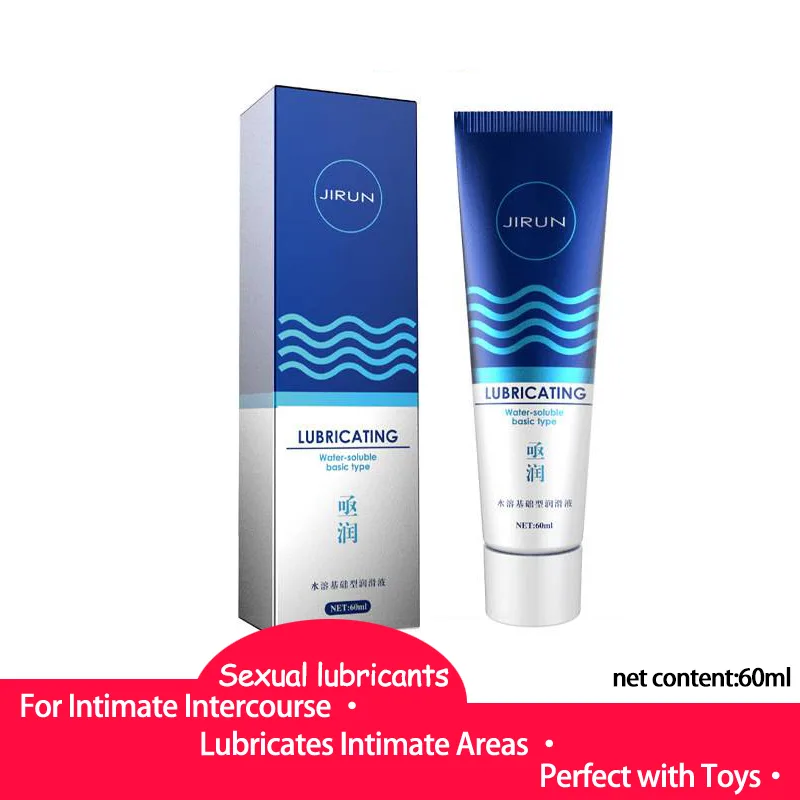
Anal play requires a dedicated lubricant because the anus does not self-lubricate; insufficient lubrication is the leading cause of first-time pain. Water-based lubricant is the recommended beginner default because it is compatible with all toy materials and safe with condoms. Silicone lubricant degrades silicone toys, oil-based products destroy latex condoms, and numbing creams should be avoided because they mask the pain that signals a need to slow down.
What is prostate massage, and is it good for you?
Prostate massage is gentle stimulation of the prostate, a walnut-sized gland that sits a few centimetres inside the front wall of the rectum, below the bladder. For people who have one, it can produce intense pleasure and a distinct kind of orgasm. Its reputation as a health practice is real but frequently overstated, and the honest picture is more useful than the sales pitch.
First, the pleasure case, because it’s the reason most people are curious. The prostate is dense with nerve endings, and stimulating it is intensely pleasurable for many men, whether directly with a curved finger or toy or indirectly through the perineum. This is well established and needs no hedging.
The health case needs more care, because the evidence supports some of it and then runs out.
Chronic prostatitis is more common than most people realize: it affects roughly 5% of men aged 20 to 50 and accounts for up to a quarter of outpatient urology visits. About 90% of those cases are a condition called chronic prostatitis/chronic pelvic pain syndrome, or CP/CPPS. What surprises people: in its April 2025 guideline update, the American Urological Association does not recommend prostate massage as a primary treatment for CP/CPPS, pointing instead to pelvic floor physical therapy, which a 2025 randomized controlled trial found significantly improved pain and quality of life.
That doesn’t mean prostate massage does nothing. The evidence is mixed in both directions. A controlled trial found that adding prostatic massage to antibiotics did not significantly improve outcomes for chronic pelvic pain syndrome (PubMed, PMID 16566972, 2006). On the other hand, in a study of an at-home prostate massage device, 46.7% of men with an enlarged prostate (BPH) and 40% of men with CP/CPPS reported “very good” symptom improvement (Open Urology & Nephrology Journal). Promising, but not a cure, and not a substitute for medical care.
We want to be straight about the limits of that chart. Those numbers come from a study connected to the device’s maker, and “very good improvement” is self-reported. It’s encouraging evidence, not a clinical verdict. We show it because it’s real data, and we flag its provenance because you’d want to know.
There are also firm contraindications. Do not attempt prostate massage with acute bacterial prostatitis (massage can spread the infection), a suspected prostate abscess or cancer, recent prostate or rectal surgery, or any active rectal bleeding. If you have prostate symptoms such as pain, difficulty urinating, or blood, see a urologist before you do anything else. A massage device is not a diagnostic tool, and using one to avoid a doctor’s visit is the one real risk in this whole area.
We cover technique in more depth in our (#) Prostate Massage 101 guide, and the research itself in our (#) evidence review.
Prostate massage is gentle stimulation of the prostate gland and can be intensely pleasurable. Its medical benefits are limited and mixed: a 2025 American Urological Association update does not recommend it as a primary treatment for chronic pelvic pain syndrome, and a controlled trial found it added no significant benefit to antibiotics, though one device study reported “very good” improvement in 46.7% of BPH and 40% of CP/CPPS patients. It is contraindicated in acute bacterial prostatitis, suspected cancer, and active rectal bleeding. (AUA 2025; PubMed PMID 16566972 2006; Open Urology & Nephrology Journal)
How do you use anal toys safely the first time?
A safe first session is slow, well-lubricated, and small. Relax before anything goes near the area, use more lubricant than seems necessary, start with a slim flared-base toy or a well-lubricated finger, and stop the moment anything hurts. Pain is information, and the correct response to it is always to slow down or stop, never to push through.
Here’s the sequence that works:
- Set up first. Privacy, time, clean hands, trimmed nails, lubricant within reach. You should not be watching the clock.
- Get aroused before any contact. This relaxes the pelvic floor. It’s the most-skipped step and the most important.
- Start externally. Gentle pressure and circling around the opening, with lubricant, until the area relaxes. There’s no timer here.
- Begin with something small. A slim finger or the smallest plug in a training set. Breathe out as you apply slow, steady pressure: exhaling relaxes the sphincter.
- Pause once it’s in. Let the internal sphincter adjust. The first minute is about staying still, not moving.
- Go slowly from there. More lubricant whenever you need it. Slow, shallow movement before anything deeper or faster.
- Stop if it hurts. Add lubricant, slow down, or stop entirely. A small amount of pressure is normal; sharp pain is not.
- Aftercare. Wash the toy thoroughly, wash yourself, and expect possible mild soreness that fades within a day.
Position helps more than people expect. Lying on your side with your knees drawn up, or on your back with your knees bent, relaxes the pelvic floor more than being on all fours, which tenses it. Experiment gently and notice which position lets you relax.
Remember the tolerability data from earlier: in the device study, 8.6% of users reported temporary soreness and serious adverse events were not recorded across more than 250,000 devices (Open Urology & Nephrology Journal). Discomfort that fades quickly is a normal part of learning. It should never be severe, and it should never be ignored.
Our (#) pain-free beginner guide walks through this with more detail, and our (#) guide to comfortable first positions covers the positioning side.
A safe first anal session is slow, well-lubricated, and small: relax first, start with a slim flared-base toy or finger, breathe out during insertion, pause to let the muscles adjust, and stop if anything hurts. Mild, brief soreness afterward is normal; in one study only 8.6% of users reported temporary soreness and no serious adverse events were recorded across over 250,000 devices in use. (Open Urology & Nephrology Journal)
How do you choose a first anal toy?
Beginners do best with a small, smooth, body-safe toy that has a flared base. Full stop. A slim silicone or stainless steel plug, or a three-size training set that lets you progress gradually, is the right starting point. Anything large, rigid, textured, or missing a flared base is wrong for a first toy, whatever the listing claims.
The selection criteria, in order of importance:
Flared base: non-negotiable. This is the one feature you cannot compromise on, for the anatomical reason covered earlier. If it doesn’t have a wide, flared base or a sturdy retrieval loop, it does not go in your body. No exceptions, no “I’ll be careful.”
Material. Non-porous only: platinum-cured silicone, borosilicate glass, or stainless steel. These can be fully cleaned and won’t harbour bacteria the way porous materials can. We cover why this matters in our beginner’s guide to sex toy materials, and the short version is that material is the one decision you can’t fix later with cleaning.
Size. Smaller than your instinct suggests. A first plug should be slim, roughly finger-width, with a gentle taper. You can always size up; you can’t undo a bad first experience with something too large.
Vibration. Optional, and nice to have rather than essential. A vibrating plug can help the sphincter relax and adds sensation, but a non-vibrating plug teaches you the fundamentals with nothing to charge and nothing to learn. Either is a fine first choice.
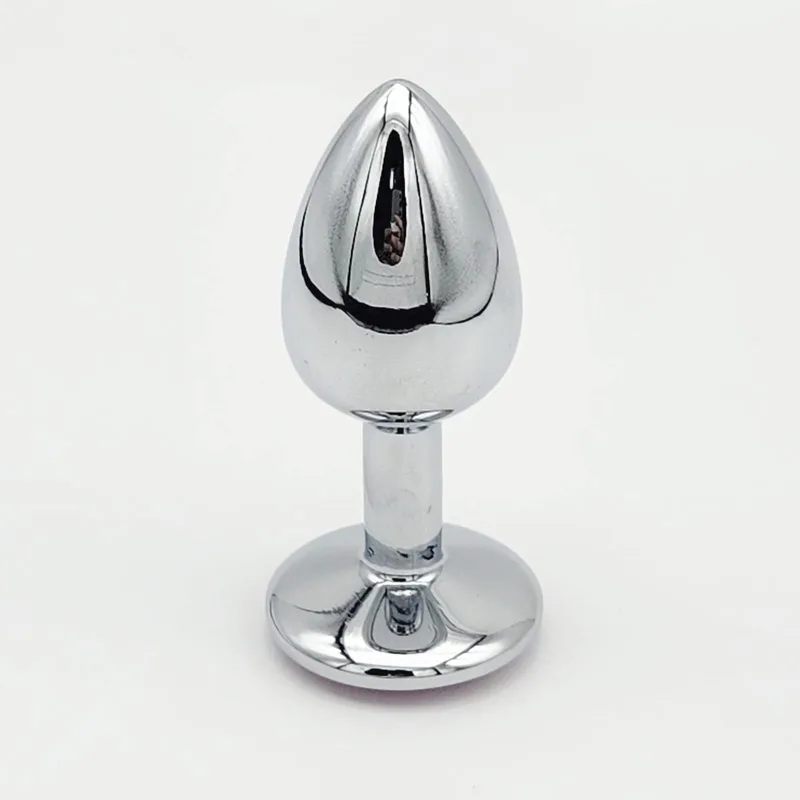
Within our own range, the shapes we point beginners to are the simple ones. A three-size steel set like our steel butt plug training set lets you start small and move up at your own pace, which is exactly how a first-timer should approach it. For a single first plug, a plain stainless steel plug is smooth, weighty, non-porous, and works with any lubricant. If you want vibration, a vibrating plug with a flared base covers both the safety requirement and the relaxation benefit. You can browse the full anal plug range once you know what you’re looking for.
We go deeper on matching shapes to bodies in our (#) guide to anal toy types, and on vibrating and advanced options in our (#) advanced anal toys review.
A first anal toy should be small, smooth, non-porous (platinum-cured silicone, glass, or stainless steel), and fitted with a flared base without exception. A slim plug or a three-size training set is the recommended starting point, since sizing up is always possible while a too-large first experience is hard to undo. Vibration is optional and can help the sphincter relax.
Privacy, discretion, and buying in the UAE
Buying an anal toy in the UAE is discreet by default when you order from a local specialist: it arrives in plain, unmarked packaging, you can pay cash on delivery, and nothing about the purchase appears on a card statement. For most buyers here, privacy isn’t a minor preference. It’s the deciding factor, so it’s worth being concrete about how it works.
Packaging. Every order ships in a plain box or envelope with no logos, no product names, and no indication of what’s inside. To anyone handling the parcel, whether a courier, a building receptionist, or a family member, it’s an ordinary delivery. We’ve documented the whole process in our guide to how discreet delivery works in the UAE.
Payment. Cash on delivery is available across Dubai, Abu Dhabi, Sharjah, and the other emirates, which means the purchase never touches a card statement if you’d rather it didn’t. If you’re weighing the two payment routes, our COD versus card breakdown covers the privacy trade-offs honestly.
Customs and legality. Because orders are fulfilled from a local warehouse, there’s no international shipping label and no customs paperwork attached to your parcel. The broader legal picture has its own nuances, and we’ve written a straight guide to whether sex toys are legal in the UAE if you want the full picture.
This is the section no international health site can write for you. The global guides cover the anatomy well and then stop, because buying discreetly in Dubai isn’t their problem. For a reader here it’s often the whole problem. The safety guidance in the rest of this guide is universal; the privacy guidance is local, and it’s the part we’d want a friend to know.
For the complete picture across every product type, our complete privacy guide to buying in Dubai and the UAE pulls it all together.
Buying an anal toy in the UAE is discreet by default with a local specialist: orders ship in plain, unmarked packaging, cash on delivery keeps the purchase off any card statement, and local fulfilment means no international shipping labels or customs paperwork on the parcel. This local privacy assurance is the factor most relevant to UAE buyers and the one international guides do not address.
Frequently asked questions
Does anal play hurt the first time?
It shouldn’t, if you relax, use plenty of lubricant, and start small. The “first time always hurts” idea is a myth sustained by people who skipped the preparation. Mild pressure is normal; sharp or lasting pain means stop, add lubricant, and go slower.
Is prostate massage safe?
For most healthy adults, yes, when done gently. Avoid it entirely with acute bacterial prostatitis, suspected prostate cancer, recent prostate or rectal surgery, or active rectal bleeding, and see a doctor first if you have any prostate symptoms (WebMD). It should never replace medical care for a real symptom.
Do I need to douche before anal play?
No. External washing with mild soap and water is enough for most people. A gentle rinse is a personal choice, not a requirement, and frequent or aggressive douching can irritate delicate tissue. Over-cleaning causes more problems than it prevents.
What’s the best lubricant for anal play?
A generous amount of water-based lubricant is the safest beginner choice: it’s compatible with every toy material and safe with condoms. Reapply often, since it absorbs and dries. Avoid silicone lubricant with silicone toys and oil-based products with condoms, and skip numbing creams.
What size anal toy should a beginner start with?
Small and slim, roughly finger-width with a gentle taper, and always with a flared base. A three-size training set is ideal because it lets you progress gradually. You can always size up later; you can’t undo a first experience with something too large.
How do I clean anal toys?
Wash non-porous toys (silicone, glass, stainless steel) with warm water and mild, unscented soap after every use, and dry them fully before storing. Anything with a motor should be wiped rather than submerged unless it’s rated waterproof. Never share a toy or move it between anal and vaginal use without washing it first.
The short version
Six things carry most of the value on this page:
- Relax, lubricate, flared base. Those three rules, each rooted in one anatomical fact, are the entire safety model.
- Pain is a stop signal. It should never hurt. When it does, slow down, add lubricant, or stop.
- Water-based lubricant is the default. It’s compatible with everything and the gentlest on tissue.
- Prostate massage is pleasurable; its medical benefits are limited and mixed. Don’t use it to avoid a doctor.
- Non-porous and small for a first toy. Silicone, glass, or steel, finger-width, flared base.
- Buying in the UAE is private by default. Plain packaging, cash on delivery, nothing on a statement.
Curiosity about this is normal, and the anxiety around it is usually worse than the reality. Go slowly, respect the anatomy, and there’s no reason it can’t be both safe and enjoyable.
Ready to start with the right first toy? → Anal Plugs · Water-Based Lubricant
Continue learning
- Buying Sex Toys in Dubai & UAE: The Complete Privacy Guide (2026)
- How Discreet Delivery Works for Sex Toys in UAE (Real Process)
- Are Sex Toys Legal in the UAE? Laws, Risks & Reality (2026 Update)
- Beginner’s Guide to Sex Toys 2026: Types & Materials
Sources
- Evaluation of an At-Home-Use Prostate Massage Device for Men with Lower Urinary Tract Symptoms, The Open Urology & Nephrology Journal, retrieved 2026-09-10, https://openurologyandnephrologyjournal.com/VOLUME/2/PAGE/20/FULLTEXT/ — manufacturer-associated; self-reported outcomes
- Shoskes DA, et al., Evaluation of prostatic massage in treatment of chronic prostatitis / chronic pelvic pain syndrome, Urology 67(4):674–678, 2006, PMID 16566972, retrieved 2026-09-10, https://pubmed.ncbi.nlm.nih.gov/16566972/
- WebMD, Are There Health Benefits of a Prostate Massage?, retrieved 2026-09-10, https://www.webmd.com/men/prostate-massage
- Verywell Health, Things to Know About Prostate Health, retrieved 2026-09-10, https://www.verywellhealth.com/things-to-know-about-prostate-health-4066015
- American Urological Association, Chronic Pelvic Pain Guideline (amended 2025), retrieved 2026-09-10, https://www.auanet.org/ — prostate massage not recommended as primary CP/CPPS treatment