
In the largest US study of its kind, heterosexual women said they orgasmed 65% of the time during sex. Heterosexual men said 95%. That 30-point gap, measured across 52,588 adults, is the reason this product category exists at all (Frederick et al., Archives of Sexual Behavior, 2018).
So the interest makes sense. What doesn’t make sense is the buying experience: six different types, hundreds of models, and product pages that all promise the same thing. Add the privacy math of a shared apartment or a family home, and most people freeze before they even start.
This guide unfreezes it. Every type explained in plain terms, a four-step decision framework, noise measurements nobody else publishes, and honest notes on buying discreetly in the UAE.
Key Takeaways
- In a US national survey of 2,056 women, 52.5% had used a vibrator, and 71.5% of users never experienced any side effect (Herbenick et al., Journal of Sexual Medicine, 2009). It’s the most mainstream pleasure product that exists
- Beginners should start with a bullet or small external vibrator in body-safe silicone. Only ~18% of women orgasm from penetration alone, so external-first fits most bodies (Herbenick et al., 2017)
- If privacy matters, choose a model under 40 dB, inaudible through a closed door in reviewer tests
- Match the type to the stimulation you want: external, internal, dual, or hands-free. Full breakdown, noise table, and UAE buying notes below
If you’re wondering about the legal picture in the UAE, that’s a separate subject; we’ve covered it, with sources, in Are Sex Toys Legal in the UAE? 2026. This page is purely about the product.
Table of contents
- Why do so many people use vibrators?
- What are the main types of vibrators?
- How do you choose your first vibrator?
- How loud are vibrators, really?
- Are vibrators safe, and can they replace a partner?
- How do you clean and store a vibrator?
- What are the best vibrators to start with in the UAE?
- Frequently asked questions
Why do so many people use vibrators?
Because they work, and because most bodies need them. In a 2009 US nationally representative survey of 2,056 women, 52.5% had used a vibrator; the companion survey of men put the figure at 44.8% (Herbenick et al., Journal of Sexual Medicine, 2009). Both surveys came from Indiana University’s Center for Sexual Health Promotion. These are population samples, not customer lists.
One clarification matters here: every prevalence figure in this article comes from US samples, because no equivalent UAE or Gulf data exists. What transfers across borders isn’t the percentage; it’s the physiology underneath it.
Remember that 65%-versus-95% gap from the intro? The same research program found why it exists. In a 2017 study, only about 18% of women said intercourse alone was enough for orgasm, while 36.6% said they needed direct clitoral stimulation (Herbenick et al., Journal of Sex & Marital Therapy). A vibrator is simply the most direct, most-studied way to supply what anatomy alone often doesn’t.
And it’s not a solo-only story. In the same 2009 survey series, 40.9% of women who used vibrators had used one during partnered sex. For a large share of owners, the toy isn’t a substitute for a partner; it’s equipment the partnership uses.
In a 2009 US national survey of 2,056 women, 52.5% had used a vibrator, and 71.5% of users reported never experiencing any side effect. A companion survey found 44.8% of men had used one, and 40.9% of women users had used one during partnered sex. That makes vibrators the most researched and most mainstream pleasure product in the literature. (Herbenick et al., Journal of Sexual Medicine, 2009)
What are the main types of vibrators?
Six types cover roughly 95% of what’s actually sold: bullet, wand, rabbit, air-pulse, G-spot, and remote or app-controlled. Learn these six and the entire category stops being a wall of identical product photos. Vibrators are also the single largest product segment in the industry, at 22.48% of the global market in 2023 (Grand View Research, 2024). One caveat on market numbers: global estimates for 2024–2025 range from about $35 billion to $46 billion depending on the firm, because each defines the category differently. Treat any single figure as an approximation.
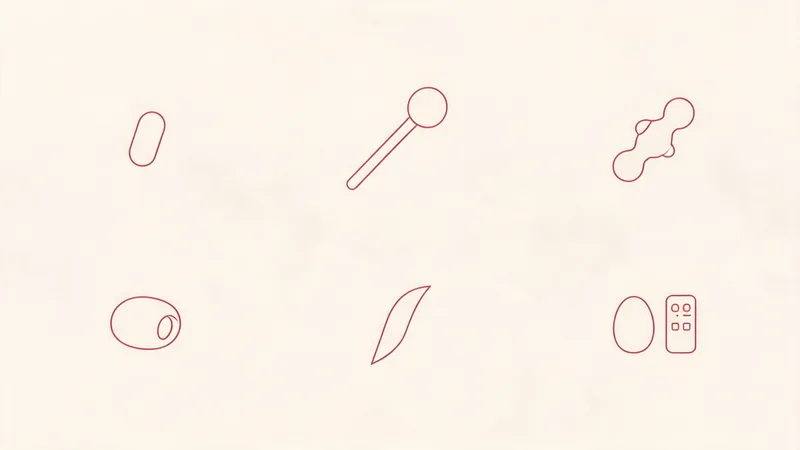
Bullet. A small capsule, usually 6–9 cm, built for precise external stimulation. Cheap, discreet, easy to hold during sex, and the quietest category on average. This is the beginner default, and it earned that position. Honest downside: the smallest motors can feel buzzy rather than deep, and a bullet is easy to misplace.You can go and check out our popular bullet vibrator.
Wand. The heavyweight. A large rounded head on a handle, originally sold as a muscle massager, delivering deep rumbly vibration nothing else matches. If smaller toys haven’t been strong enough, this is the fix. Honest downside: plug-in models are the loudest things in the category; more on that in the noise section.Our Wand Massager, Dual ends combine wand-style and dildo-style stimulation in one device.
Rabbit. Dual stimulation: a shaft inside, a vibrating arm against the clitoris, both at once. The “blended orgasm” pitch is real, and it’s why rabbits have dominated for two decades. Honest downside: fit is anatomy-specific, so a rabbit that suits one body can miss on another. Our rabbit vibrator is waterproof and rechargeable, which covers the two specs that matter most here.
Air-pulse (suction). The newest category and the one that feels least like a vibrator. Instead of a motor against skin, a small nozzle pulses air around the clitoris, and many users describe it as closer to oral sex than vibration. For people who find direct vibration too intense or numbing, this is often the answer. Honest downside: the sensation is distinctive enough that a minority simply don’t like it. Our OG double vibrator with clit sucker pairs air-pulse with a vibrating shaft.
G-spot. A slim shaft with a deliberate curve and a firm, angled tip, designed to press the front vaginal wall. It’s a targeted tool, not an all-rounder. Honest downside: the G-spot responds to pressure more than vibration, so technique matters; this type rewards patience.
Remote and app-controlled. Any of the shapes above, plus a wireless remote or a phone app. The point isn’t the shape; it’s who holds the controls. Couples use these across a room or, with app models, across a distance. Honest downside: app features mean pairing, charging, and the occasional firmware mood. Our remote-controlled heating model adds a warming function on top.
Six types cover roughly 95% of the vibrator market: bullet, wand, rabbit, air-pulse, G-spot, and remote-controlled. Vibrators are the industry’s largest product segment at 22.48% global share (Grand View Research, 2024), though total market estimates vary widely between research firms. Beginners are best served by a bullet; dual-stimulation seekers by a rabbit; intensity seekers by a wand.
How do you choose your first vibrator?
Four decisions, in this order: stimulation type, material, power and noise, budget. Most buyers do it backwards. They start with a price or a pretty shape, then wonder why the drawer full of regrets exists. There’s a data reason to start with stimulation: only ~18% of women orgasm from penetration alone (Herbenick et al., 2017), so for most beginners, external-first is the statistically sensible entry point.
Decision 1: stimulation. External (clitoral): bullet or wand. Internal: G-spot curve. Both at once: rabbit or a dual air-pulse model. Partner-controlled: remote or app type. Genuinely unsure? External is the safest bet; it’s also how most couples’ toys get used.
Decision 2: material. Body-safe silicone, full stop, for anything that touches you. The full materials framework (non-porous versus porous, how to verify a claim) lives in our beginner’s guide to sex toys. Short version: if a listing won’t name its material, walk away.
Decision 3: power source and noise. This is where UAE living conditions sneak in: shared walls, family housing, thin doors. Rechargeable is the right default, but the honest comparison:
| Battery (AA/AAA) | USB-rechargeable | |
|---|---|---|
| Typical runtime | 2–4 hours per set of cells | 60–120 minutes per charge |
| Power over time | Fades steadily as cells drain | Consistent until nearly empty |
| Long-term cost | Cheap upfront, batteries forever | Higher upfront, nothing after |
| Gulf heat tolerance | Cells can leak in a hot drawer | Lithium ages faster above ~35°C, so store cool |
| Discretion | Spare cells rattle in drawers | Charges like a phone; nothing to explain |
Decision 4: budget. Three bands cover the market:
| Budget | What you get | Who it suits |
|---|---|---|
| Under AED 75 (~$20) | Single or few speeds, basic silicone, battery powered | Curious first-timers testing the water |
| AED 75–220 (~$20–60) | Multiple speeds and patterns, body-safe silicone, waterproof, rechargeable | Most buyers, the sweet spot |
| AED 220+ (~$60+) | Stronger motors, air-pulse tech, app control, real warranties | Buyers who already know what they like |
Notice what the top band buys: not more settings, but better motors and engineering. Working through all of this for the first time? Our first-time buyer’s checklist turns the same decisions into a step-by-step purchase flow.
Only about 18% of women orgasm from penetration alone, per a 2017 US study, so most beginners should start with external stimulation. The four-step framework: choose stimulation type first, then body-safe silicone, then a power source matched to your privacy needs, then budget. The AED 75–220 band covers most buyers (Herbenick et al., Journal of Sex & Marital Therapy, 2017).
How loud are vibrators, really?
Quieter than you fear, if you choose right. Reviewer-measured testing puts genuinely discreet models under 40 dB, below the hum of a refrigerator and, in practice, inaudible through a closed door. Plug-in wands sit at the other extreme, measured above 60 dB: louder than normal conversation. One honesty note before the numbers: these figures come from independent reviewers running decibel meters, not clinical labs. We label them as reviewer-tested because that’s what they are: consistent enough to shop by, not precise to the decimal.
What makes one toy loud and another silent? Three things. Motor quality first: cheap motors buzz at high pitch, good ones rumble low, and low frequencies carry less through doors. Casing second: hard plastic resonates like a drum; thick silicone dampens. Setting third: most toys run far quieter at level two than level ten.
Practical discretion, from what we see as a Dubai-based shop serving exactly this situation:
- Start on the lowest setting. Many “too loud” returns we see involve toys only ever run at maximum.
- The duvet test. Under a thick duvet, most sub-40 dB toys drop to effectively nothing. Test at home before you need to trust it.
- Background sound helps. A bathroom fan, the AC, or a TV masks more than any product spec.
- Rechargeables are the quiet default. Loose battery cells add a rattle no motor spec mentions.
Reviewer-measured decibel testing shows discreet vibrators run under 40 dB, quieter than a refrigerator hum and inaudible through a closed door, while plug-in wand vibrators exceed 60 dB, louder than normal conversation. Motor quality, silicone casing thickness, and intensity setting determine real-world noise more than marketing claims (PleasureBetter and TheDildoHub measured tests, 2024–2025; reviewer-tested, not clinical).
Are vibrators safe, and can they replace a partner?
Safe, yes, and the strongest evidence says actively beneficial. In 2023, a systematic review of 21 studies linked vibrator use to improved sexual function, stronger pelvic floor muscles, and reduced vulvar pain (Dubinskaya et al., Sexual Medicine Reviews, via SMSNA). A 2024 pilot study of 79 women measured significant improvement in function scores (p=0.002) and reduced pain (p=0.0008) with regular use (International Urogynecology Journal). A pilot of 79 isn’t the last word, but it points the same direction as the 21 studies before it.
What about going numb? That’s the most persistent myth in the category, and it has no scientific basis. Temporary desensitization after a strong session is real, and it fades within minutes to hours. Permanent loss of sensitivity has never been documented. In the 2009 national survey, 71.5% of users reported no side effects at all, and the most common one was exactly that brief, temporary numbness (Herbenick et al.). If a strong toy leaves you feeling less for a while, vary the pressure, lower the setting, take breaks. That’s the whole fix.
The “replacement” fear collapses under its own data too. Remember: 40.9% of women users had used a vibrator with a partner. Couples aren’t being replaced by these things; they’re buying them together.
One genuine caveat, because trust matters more than reassurance: persistent pain, not brief soreness but pain that keeps showing up, is a reason to talk to a doctor, not a product page. Gynecologists know this territory well; vibrators are used clinically in pelvic floor therapy. Nothing here is medical advice.
A 2023 systematic review of 21 studies found vibrator use associated with improved sexual function, pelvic floor strength, and reduced pain, and a 2024 pilot study of 79 women measured significant function improvement (p=0.002). Numbness fears lack scientific basis: 71.5% of users in a US national survey reported no side effects, and documented effects were mild and temporary (Dubinskaya et al., 2023; Herbenick et al., 2009).
How do you clean and store a vibrator?
Warm water and mild, fragrance-free soap after every use. That’s 90% of the job. The detail that trips people up is waterproofing: only fully waterproof models, rated IPX7, can be submerged or held under a running tap. An IPX4 rating means splash-proof only, so clean those with a damp soapy cloth and keep water away from the charging port. No competitor guide explains this distinction; it’s the difference between a toy that lasts years and one that dies in a sink.
Three habits cover the rest:
- Dry fully before storage. Trapped moisture in a charging port or seam is what actually kills motors.
- Mind the Gulf heat. Heat degrades lithium batteries and softens TPE materials. Store below roughly 30°C, never in a car, and not in a drawer that gets afternoon sun through a window.
- Use the pouch. Most rechargeable toys ship with a storage bag. It keeps silicone dust-free, prevents material contact reactions, and, not incidentally, looks like nothing at all in a drawer.
Shared-bathroom reality check: wash it where you’d wash anything private, dry it with your own towel, pouch it before it goes back. The whole routine takes two minutes.
What are the best vibrators to start with in the UAE?
Match the pick to the decision you made three sections ago. Beginners: a bullet or small external vibe. Dual stimulation: a rabbit. Privacy-first: anything under 40 dB and USB-rechargeable. And buying online is the normal route: e-commerce accounts for 57% of US distribution in this category, with vibrators the fastest-growing segment (Grand View Research, 2024). The UAE follows the same pattern, with a privacy layer on top.
Four picks from our own shelves, with the honest reason for each:
- Rabbit vibrator, waterproof and rechargeable: the dual-stimulation classic, and the model we’d point to after “I want both at once.” Waterproof means genuinely washable.
- OG double vibrator with clit sucker: air-pulse plus vibration in one toy. The pick for anyone who found plain vibration underwhelming or too intense.
- Remote-controlled heating model: for couples. Hand the remote over; the warming function is the detail people reorder for.
- Full vibrators collection: if you want a simple bullet to start, browse here; the whole range is silicone and most of it is under AED 220.
What do we actually see, as a Dubai-based shop? Beginners reorder external types far more than internal ones. Returns cluster on two complaints: “too loud” from buyers in shared housing who skipped the noise math, and “too strong to start” from buyers who went straight to a wand. Battery models are the third pattern; they come back dead after a summer in a hot drawer. Everything in this guide exists to route you around those three outcomes.
On delivery: packaging is plain and unbranded; here’s how discreet delivery works. COD is available if you’d rather not use a card. And same-day delivery covers most of Dubai.
In 2024, e-commerce accounted for 57% of US sex toy distribution, with vibrators the fastest-growing segment. Online purchase with discreet fulfillment is the category’s default, not its edge case (Grand View Research). For UAE beginners: start external with a bullet or small vibrator under 40 dB, choose USB-rechargeable silicone, and use a local shop offering plain packaging and cash on delivery.
Frequently asked questions
What’s the difference between a dildo and a vibrator?
A vibrator has a motor; a dildo doesn’t. Dildos work through shape, size, and texture alone; nothing to charge, nothing to break. Vibrators add powered stimulation, which is what most bodies actually need: only ~18% of women orgasm from penetration alone (Herbenick et al., 2017). Many people own one of each.
What type of vibrator is best for beginners?
A bullet or small external vibrator in body-safe silicone. It’s the cheapest type, the easiest to control, and external stimulation matches how most women reach orgasm. If privacy matters in your housing, add one filter: under 40 dB, which reviewer tests show is inaudible through a closed door.
Can using a vibrator make you numb?
Not permanently; this is a myth. In the 2009 US national survey, 71.5% of vibrator users reported no side effects at all; the most common report was brief, temporary numbness that resolves on its own (Herbenick et al.). Vary pressure, use lower settings, take breaks.
Are expensive vibrators worth it?
Above roughly AED 220 (~$60), you’re paying for motor quality, full waterproofing, and a warranty: things you feel every use. Under AED 75, diminishing returns hit fast: weak buzzy motors and materials you can’t verify. The AED 75–220 middle band is where most buyers should land.
How do I clean a vibrator properly?
Warm water and mild fragrance-free soap after every use. Only IPX7-rated models can be submerged; IPX4 means splash-proof, so use a damp cloth and protect the charging port. Dry completely before pouching; trapped moisture kills more motors than use does.
The short version
Five decisions carry this whole page:
- Stimulation before shopping. External, internal, dual, or hands-free: that answer picks your type for you.
- External-first for beginners. Only ~18% of women orgasm from penetration alone.
- Silicone or nothing. Body-safe, non-porous, named on the listing.
- Under 40 dB if anyone shares your walls. Inaudible through a closed door.
- Rechargeable, stored cool. Gulf heat is hard on batteries and soft materials alike.
The category stopped being niche a long time ago: 52.5% of women in a national survey have used one. The only question left is which type fits your body and your living situation. Now you know how to answer it.
Ready to choose? → Browse the vibrators collection — plain packaging, COD, same-day Dubai delivery. New to toys entirely? Start with our beginner’s guide to sex toys.
Continue learning
- Beginner’s Guide to Sex Toys 2026: Types & Materials
- First time buying sex toys in UAE? Complete checklist
- How Discreet Delivery Works for Sex Toys in UAE (Real Process)
- Are Sex Toys Legal in the UAE? Laws, Risks & Reality (2026 Update)
Sources
- Herbenick D, Reece M, Sanders S, Dodge B, Ghassemi A, Fortenberry JD, Prevalence and Characteristics of Vibrator Use by Women in the United States: Results from a Nationally Representative Study, Journal of Sexual Medicine 6(7):1857–1866, 2009, retrieved 2026-08-15, https://pubmed.ncbi.nlm.nih.gov/19453881/ — n=2,056; a co-author was affiliated with Church & Dwight
- Reece M, Herbenick D, Sanders S, Dodge B, Ghassemi A, Fortenberry JD, Prevalence and Characteristics of Vibrator Use by Men in the United States, Journal of Sexual Medicine 6(7):1867–1874, 2009, retrieved 2026-08-15, https://academic.oup.com/jsm/article-abstract/6/7/1867/6834403
- Frederick DA, John HK St., Garcia JR, Lloyd EA, Differences in Orgasm Frequency Among Gay, Lesbian, Bisexual, and Heterosexual Men and Women in a U.S. National Sample, Archives of Sexual Behavior 47(1):273–288, 2018, retrieved 2026-08-15, https://pubmed.ncbi.nlm.nih.gov/28213723/ — n=52,588
- Herbenick D, Fu TJ, Arter J, Sanders SA, Dodge B, Women’s Experiences With Genital Touching, Sexual Pleasure, and Orgasm, Journal of Sex & Marital Therapy 44(2):201–212, 2017, retrieved 2026-08-15, https://pubmed.ncbi.nlm.nih.gov/28678639/
- Dubinskaya A et al., Is It Time for Doctors to Prescribe Vibrators? A Systematic Review, Sexual Medicine Reviews, 2023, as summarized by the Sexual Medicine Society of North America, retrieved 2026-08-15, https://smsna.org/patients/did-you-know/a-medical-role-for-vibrators — 21 studies reviewed
- Regular vibrator use and female sexual function: a pilot study, International Urogynecology Journal, 2024, retrieved 2026-08-15, https://pubmed.ncbi.nlm.nih.gov/38668760/ — pilot, n=79
- Grand View Research, Sex Toys Market Size, Share & Trends Analysis Report, 2024, retrieved 2026-08-15, https://www.grandviewresearch.com/industry-analysis/sex-toys-market — vibrators 22.48% segment share, 2023; competing 2024–2025 global estimates from other firms range ~$35–46B due to differing category definitions
- Grand View Research, U.S. Sex Toys Market Analysis (press release), 2024, retrieved 2026-08-15, https://www.grandviewresearch.com/press-release/us-sex-toys-market-analysis — e-commerce 57% of US distribution
- PleasureBetter and TheDildoHub, measured vibrator decibel tests, 2024–2025, retrieved 2026-08-15, https://pleasurebetter.com / https://thedildohub.com — reviewer-tested measurements, not clinical; figures vary by model and setting